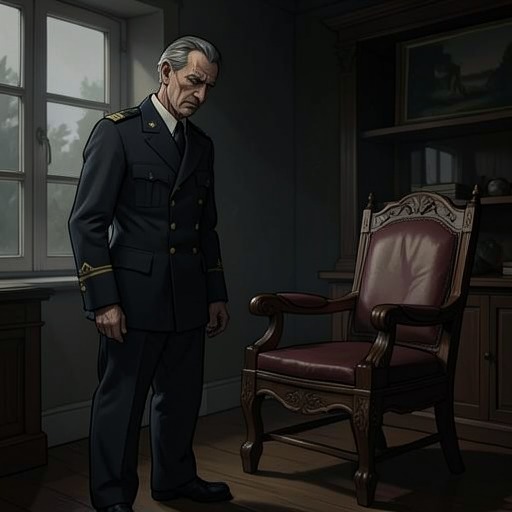
Stilwell's Leave Dispute and Emergency Departure
The Caine MutinyStilwell's Leave Dispute and Emergency Departure follows two efforts to secure time away from the Caine for a sailor under restriction. Willie Keith first pleads unsuccessfully with Philip Francis Queeg to ease Stilwell's confinement during the ship's overhaul. Later, when a telegram appears to announce that Stilwell's mother may die, Keith persuades Steve Maryk to grant a seventy-two-hour pass after uncovering the personal crisis behind the message. Stilwell departs but does not return by the deadline, leaving Maryk's decision exposed to Queeg. The episode turns a dispute about one sailor's absence into a test of how compassion, delegated authority, and obedience operate aboard the ship.
The Restriction and Keith's Appeal
During the overhaul, Keith goes to Queeg to clarify whether Stilwell's restriction to the ship is still in effect. Queeg answers that restriction means confinement to the ship even during the overhaul, comparing it to a prisoner's sentence continuing through a holiday. The dispute is not about whether Stilwell has broken a rule; it is about whether the captain will make an exception to the punishment while the ship is in port and undergoing work.
Keith tries to distinguish Stilwell's circumstances from those of a criminal. The sailor, he argues, has spent two years fighting overseas. Queeg rejects that as a reason for leniency: enlisted men in the brig or guardhouse have also been at war, he says in effect, and wartime pressure requires stricter discipline rather than relaxation. He casts an exception as a danger to the organization as a whole and treats Keith's concern as misplaced sentiment in his role as morale officer. His reasoning converts an individual request into a question of whether discipline can survive any concession.
The interview ends not with an agreement but with Keith becoming physically ill and vomiting on the deck. Queeg responds without anger, tells him to have a steward's mate clean up, and suggests that he get fresh air. The calm response does not change the decision: Keith's plea for Stilwell has failed. When he later conveys the outcome, Stilwell accepts it with a stiff, restrained response. The episode leaves Keith unable to help him through the captain's authority, and the sailor remains under the restriction.
A New Emergency and Maryk's Decision
The later request begins with Stilwell approaching Maryk and handing him a wrinkled telegram. Its message says that his mother is very sick and may not live, and asks him to come home. Keith asks Stilwell to step away from the desk so he can speak privately with the executive officer. He then tells Maryk that the message has been arranged through Stilwell's brother and that his mother is not the person he is actually anxious about. Stilwell is worried about his wife.
Keith argues that Stilwell should be allowed to leave for seventy-two hours. The sailor lives in Idaho, he points out, and could fly home within hours; the telegram could serve as an excuse if Queeg learns of the absence. The proposal is therefore both an appeal to Stilwell's personal need and a practical attempt to make the leave possible without an immediate confrontation with the captain. Maryk hesitates, asking whether Stilwell will promise to return at the end of the pass. Stilwell swears that he will.
Maryk then directs Keith to prepare the paperwork rather than wait for the yeoman. Keith types the form within minutes, and Maryk signs it, authorizing Stilwell to leave. This decision contrasts sharply with Queeg's earlier refusal: the captain treated strict application of the restriction as essential, while the executive officer uses his authority to answer the sailor's urgent family situation. Maryk's question about the return promise also makes the pass conditional on trust; Stilwell's assurance is part of the basis on which the leave is granted.
The Missed Deadline
At the end of the seventy-two hours, Stilwell has not returned to the Caine. Queeg has returned as well. Keith learns of both facts early in the morning by telephone, while staying at his mother's hotel suite, and asks whether Stilwell is back. The missed deadline changes the meaning of Maryk's choice: what had been a limited, authorized pass now becomes an absence that the captain can challenge.
At the officers' muster, Queeg asks whether Stilwell was present. Maryk begins to answer, but Keith intervenes, saying that Stilwell is there and explaining that he saw him at the gangway just after muster. Queeg appears satisfied for the moment, then directs Maryk to put the sailor on report for being late. Keith thinks he has kept the situation from worsening. Maryk instead tells Queeg that he gave Stilwell a seventy-two-hour pass. Queeg is astonished and asks why Maryk authorized it; Maryk explains that Stilwell had presented a telegram saying his mother was dying. The episode's available account ends with that disclosure, without establishing what disciplinary action, if any, follows.
Command, Compassion, and the Caine's Order
The two appeals show Keith moving from an unsuccessful direct petition to an active role in securing leave through Maryk. In the first encounter, Queeg insists that discipline cannot be relaxed for a sailor's circumstances. In the second, Keith brings the executive officer the information that the telegram does not reveal, and Maryk makes a discretionary decision based on the real family concern. The result is not a simple victory for compassion: Stilwell's failure to return places the executive officer's choice in direct conflict with the captain's command.
The incident also belongs to the Caine's wider pattern of rules being enforced most visibly within Queeg's reach. The ship's crew learns to observe new directives especially where the captain can see or hear them, while life elsewhere aboard continues under the sailors' own informal habits. Against that background, the leave is more than an isolated favor. Maryk formally signs the pass, yet the captain's subsequent questioning shows how precarious delegated discretion can be when it departs from Queeg's expectations. The episode stops before the consequences are settled, leaving the tension between strict obedience and responsible judgment unresolved.